Dental IT services built for independent practices.
Phoenix IT keeps your practice management software, imaging, phones, networks, backups, and cybersecurity working together — with fast support from people who understand dental technology.
Generic IT support fails dental practices.
An hour of downtime in a dental office isn't an inconvenience — it's cancelled production, a full waiting room, and staff improvising with paper. Generalist IT providers don't know why the sensor in op 3 stopped talking to Dexis, and they've never sat on hold with a practice management vendor. We have. It's all we do.
Images crawl in the operatories and X-rays take minutes to load.
We rebuild the network for imaging traffic — wired ops, segmented lanes for imaging and records, and servers spec'd for CBCT files.
The practice management server goes down and the day stops.
We monitor it 24/7, catch failures early, and keep verified backups ready — most practices are back up before the schedule slips.
Your front desk spends hours on hold with software vendors.
One number: ours. We hold the line with Dentrix, your imaging vendor, and your ISP, and we own the ticket to resolution.
A new sensor or CBCT arrives and nobody can make it talk to the software.
We coordinate the install, drivers, calibration, and imaging-software bridge with the vendor — and test every op before the first patient.
You're not sure the backup actually works.
We back up overnight, off-site, immutable — and verify restores. Proof lands in your inbox, not in a promise.
HIPAA paperwork is a binder nobody has opened.
We hand you the binder — risk assessment support, policies, training records, and documentation that's ready when an auditor asks.
Independent practices, startups, and growing groups.
Established practices
Single-office and multi-op practices that need imaging, practice management, and phones to just work — and a help desk that picks up.
Startups & relocations
Opening a new office or moving? We handle cabling, network build-out, server setup, imaging integration, and vendor scheduling so opening day is boring.
Multi-location dental groups
Two offices or twenty — standardized security, shared logins, central monitoring, and one help desk for every location. See multi-location healthcare IT.
Everything a dental office runs on, handled.
- Server hosting, updates & performance tuning
- Database backups verified daily
- Vendor coordination for upgrades & patches
- Dexis, DTX Studio, Carestream, Sidexis, Schick
- New sensor & CBCT installs, calibration & bridges
- Image storage sized for 3D files
- Managed firewall & segmented imaging lanes
- Strong Wi-Fi in every op
- Backup internet for outages
- 24/7 managed detection & response
- Phishing protection & staff training
- MFA on every login
- Overnight, off-site, immutable backups
- Verified restores — proof in your inbox
- Same-day recovery objectives
- VoIP phone support & vendor management
- Payment terminal connectivity
- Workstation lifecycle & replacements
We speak dental software.
Day-to-day support and vendor coordination for the systems dental practices actually run. Phoenix IT is an independent provider — we don’t sell software, and we don’t claim vendor partnerships we don’t have.
Cybersecurity and HIPAA, built in.
Ransomware is the #1 threat to dental practices.
Dental offices are a favorite target: valuable patient records, small IT footprints, and vendors with remote access. Every Phoenix plan includes 24/7 managed detection and response, email protection, dark-web credential monitoring, and annual staff training.
Healthcare cybersecurity services →HIPAA support that survives an audit.
Security risk assessment support, written policies, access controls, encryption, training records, and documentation kept current — so the binder is full before anyone asks for it. We support your compliance efforts; we don’t sell false guarantees.
HIPAA IT compliance support →Backups that focus on recovery, not checkboxes.
Three copies, three places, tested restores. If a server dies or ransomware hits, the question is how fast you’re seeing patients again — our answer is usually the same day.
Backup & disaster recovery →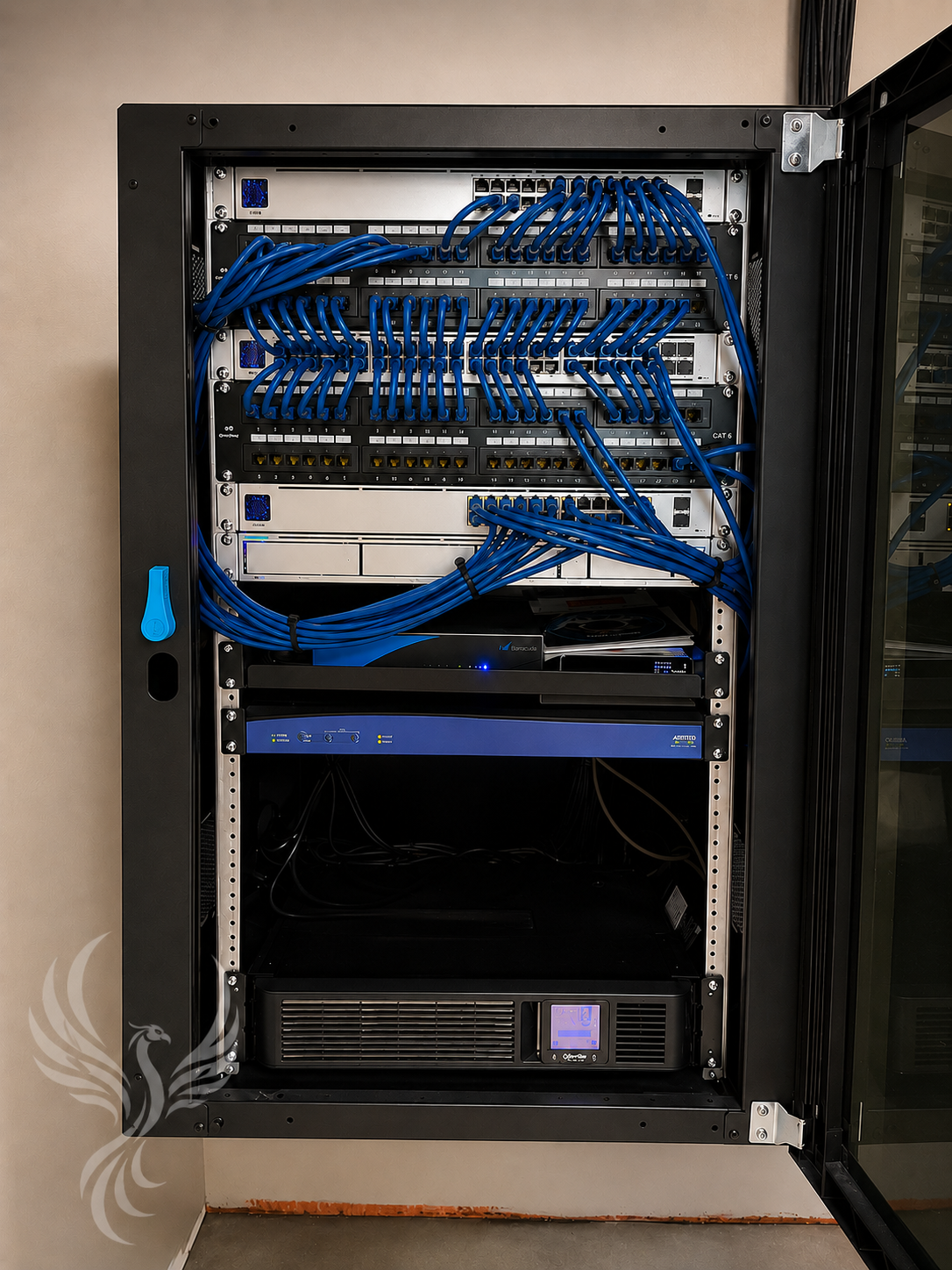
One number. A team that knows your ops by name.
Call, email, or text
Under 30 seconds to a real technician during business hours. After-hours emergencies route to a human on call — no phone tree, no call center.
Remote fix first
Most issues are resolved remotely within the first call. We already know your practice management version, your imaging bridge, and your network.
Onsite when it matters
A down op, a failed server, new hardware — we come to you. No mileage fees, no trip charges.
Vendor escalation handled
If it’s a software vendor problem, we open the ticket, hold the line, and see it through. Your staff goes back to patients.
The practice’s server went offline office-wide at 6:45 AM, fifteen minutes before the first patient. Phoenix had monitoring alerts before the office manager’s coffee — and the server back up in under 15 minutes.
A Twin Cities dental practice’s server failed before morning huddle. Because Phoenix monitors 24/7 and keeps verified same-day recovery points, the 7:00 AM patient was seen on time and the schedule never slipped.
Straight answers for dental practices.
Do we have to switch practice management or imaging software?
No. We support what you already run — Dentrix, Eaglesoft, Open Dental, and the imaging systems attached to them. If something genuinely needs replacing, we tell you why, show you the numbers, and do the work when you decide.
Our Dentrix server is slow. Can you fix it without a rip-and-replace?
Usually, yes. Most dental server problems are configuration, storage, or network issues — not dead hardware. We diagnose first. When hardware is the real problem, we spec it for dental imaging workloads, not generic office use.
How fast do you actually respond when an operatory is down?
Help desk pickup averages under 30 seconds during business hours. A down operatory or server is treated as an emergency: a technician starts working it immediately, remote first, onsite when needed — with no trip charges.
Do you handle our dental vendors for us?
Yes. When Dentrix support, your imaging vendor, and your ISP all point at each other, your front desk shouldn't referee. Your team calls one number — ours — and we run the vendor calls to resolution.
Is HIPAA support included, or an add-on?
Included. Security risk assessment support, staff training, access controls, encryption, and audit-ready documentation are part of the plan. See our HIPAA IT compliance support for the full picture.
What does dental IT support cost?
One all-inclusive monthly price scaled to your practice — no trip charges, no overage fees, no surprise invoices. Book a consultation and we'll quote it plainly after a short walkthrough.
Minnesota
Twin Cities metro and greater Minnesota — remote support with fast onsite dispatch.
Dental IT services in Minnesota →Wisconsin
Western Wisconsin practices supported remotely with coordinated onsite service.
Dental IT services in Wisconsin →Iowa
Iowa dental practices supported remotely with coordinated onsite service.
Dental IT services in Iowa →Talk with a dental IT specialist.
A 30-minute call and a quiet walkthrough of your practice. You get a written report and a plain-language quote — you decide what’s next.
Guides for dental practice owners.
The Complete Guide to Dental IT Support
What a dental practice actually needs from IT — practice management, imaging, network, security, and backup — and how to judge whether you’re getting it.
Read the guide →Dentrix IT Requirements and Common Failure Points
Server specs, database health, imaging bridges, and the five configuration mistakes behind most “Dentrix is slow” complaints.
Read the guide →How to Change Dental IT Providers
A step-by-step switching plan — what to gather, what to demand from the old provider, and how to cut over without losing a patient hour.
Read the guide →Related services
From the resource library
Next step
See where your practice stands in ten minutes — no scanning, no obligation.
Take the cybersecurity assessmentTalk with a healthcare IT specialist